Faceless TikTok with an AI character as your face
9 min read
A faceless TikTok account is one where the owner never appears on screen. You can post to one every day, and what these accounts usually lack is a face viewers remember. On Duble AI, that face is an AI character that steps into the day's trends with each trend's original sound. A video takes a few minutes and starts at $3.33.
What are the usual faceless TikTok formats?
The usual formats are a voice over stock footage, a screen recording and text on screen. All three work without the owner appearing, and all three share a weak spot: nobody is there for the audience to remember.
| Format | What viewers see | What it does well | Weak spot |
|---|---|---|---|
| Voice over stock footage | Library clips with a voice on top | Covers any topic | With no face, the account blends into the others on the same topic |
| Screen recording | An app or a website being used | Shows a how-to | With no face, only the voice is recognizable |
| Text on screen | Lines over a song or a background | Needs no voice and no camera | With no face, viewers keep the line and forget the account |
| AI character | The same figure in different scenes | Gives the account a face | Videos cost credits, and the character does not narrate: the sound is the trend's |
On a feed of short videos, a face that repeats gives the viewer something to recognize. The first three formats do not have one.
Why does a faceless account need a character?
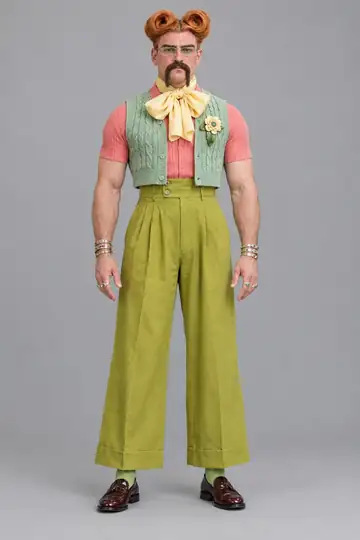
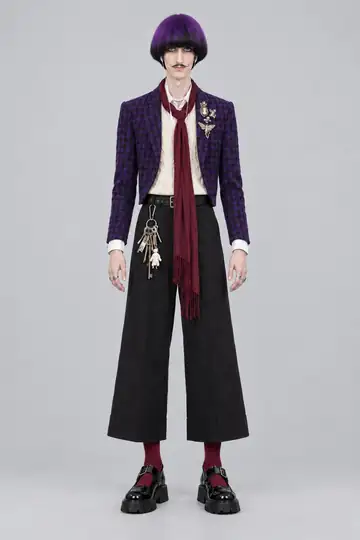
An AI character is a face that is not yours. It shows up in every video, has a name and a look, and a viewer who sees it twice knows who it is. Two of the faceless accounts that drew the most attention in 2025 and 2026 follow that logic: the figure stays the same and the scene changes.
Granny Spills is an AI grandmother, 75 years old, in pink designer outfits, who gives blunt advice about the luxury life. According to TIME (November 2025), she was created in July 2025 by two partners at Blur Studios and gathered about 400,000 TikTok followers and 1 million on Instagram in her first few weeks.
Jean Phil, whom Dexerto described in September 2026 as an AI-generated character, always wears a brown suit, with a blond bob and a curled mustache, and shadowboxes in silence in increasingly absurd places. The outfit and the action stay put, and only the setting changes. One of his videos reached about 35.9 million views on Instagram, according to LADbible (September 2026). The reports cited do not identify who runs the account, and the full story is in who is Jean Phil.
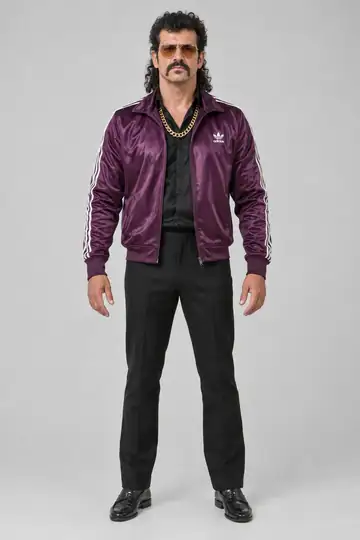
A good character is easy to describe: a person, one strong visual detail and an attitude. Dimas VHS, the character in the picture above, owns an arcade and a secret plan, and that is enough to guess how he would react to any trend. How to create an AI character covers the description that works.
On Duble AI, the character does the trend for you. You pick the trend and the influencer, and the AI remakes the trend's video with your influencer in place of whoever is in it, with the movement and the sound of the original. The scene may change a little. How to make AI trend videos has every button.
In the app, your AI influencer is called a double. You can describe one in a sentence, build it part by part, make it from your own photos or take a ready-made one from the cast. Creating it costs nothing, up to 3 images across tries and adjustments. How to create an AI influencer covers all four ways, and keeping one AI influencer consistent explains what holds the face the same from one trend to the next.
What does a week of faceless TikTok posts look like?
A week is one video a day, each in a different trend from the Trending list. The order below is a suggestion, and the list changes, so swap a day if a trend of that kind is missing.
- Day 1. The most-viewed trend on the list, so the character introduces itself on a wave the audience already knows.
- Day 2. A trend with more people in it, such as an interview or a party. The character appears next to real people.
- Day 3. A trend where it walks or arrives somewhere, such as a pass through a stadium crowd.
- Day 4. A dance trend. Only one in the week, so the account does not become "the one that only dances".
- Day 5. A new trend with a new look, which costs 2 credits. The face stays and the clothes change.
- Day 6. A video of your own, filmed on your phone, with the character in your place. Use only footage you have the right to use.
- Day 7. The kind of trend that got the most replies in the comments during the week.
The views on a card are those of the trend's original video or, where the original's count is not known, an estimate. They measure the size of the wave and say nothing about what your version will reach. To pick a trend before it saturates, see how to find TikTok and Instagram trends early.
Seven ten-second videos at Standard quality cost 20 credits each and fit inside the 160 credits of "A week of posts" ($29.99), which makes 8 ten-second videos. Credits never expire. Pricing is per second, so a longer trend costs more. If you post less than daily, the $49.99 monthly plan gives 15 ten-second videos, from $3.33 each.
Make the videos ahead of time. Each takes one to three minutes at Standard quality, and you can leave the page while it is made. When it is ready, Save video hands the file to your phone's camera roll, and on a computer the button is Download video.
What do the sourced cases say about earning on a faceless TikTok?
The platform decides case by case and nothing is guaranteed. The sourced cases show the risk.
TIME reported in November 2025 that, according to one of Granny Spills' creators, her videos were being flagged by TikTok as "unoriginal" and dropped from the Creator Rewards Program, TikTok's payout program. Her creators said they hoped to earn through Facebook, YouTube, Cameo and brand deals. In August 2026, Kolsquare, an influencer-marketing platform, listed her with 1.9 million Instagram followers and said she had mentioned the brands Kurt Geiger and Papi Steak over the previous six months.
The Big Yowie vlogs, starring an AI Bigfoot, show the cost side. Kapwing reported in July 2025 that the creator pays $250 a month for Google's Veo 3 Ultra plan, with a cost of about $3 a clip, and needs 5 to 10 attempts per clip. At four attempts a clip, Kapwing's sum comes to about $100 for a 60-second video. With more than 250,000 followers and 35 million views from 20 posts, the series was still running at a loss.
A trend video on Duble AI starts from a clip that already exists, so the price is fixed per second: 20 credits for 10 seconds at Standard quality, from $3.33. If a video fails, the credits come back at once. The two are different jobs, since the vlog builds scenes from scratch and a trend remakes a finished one.
None of these cases proves that a faceless account earns money, and Duble AI does not promise reach, followers or income. The ways a profile earns, each with its limits, are in how to make money on TikTok without showing your face.
What do "unoriginal content" rules mean for a faceless account?
"Unoriginal content" is the term in the TikTok case above, and YouTube calls the category of repetitive or mass-produced videos that cannot be monetized "inauthentic content". A trend-based account with an AI character can come close to that line, and it helps to know where it sits.
On TikTok, the sourced case is Granny Spills, above. The same TIME piece says a TikTok representative, asked for comment, pointed to a support page about "unoriginal or low-quality content". The case is that of a character her own creators invented. We did not read TikTok's policy text, so where exactly the line sits is a question this page cannot answer.
On YouTube, the rule is written down. In July 2025 the policy on repetitious content was renamed inauthentic content. The page says mass-produced or repetitive content has always been ineligible for monetization. AI content made from generic or unoriginal templates that gives an impression of mass production is not allowed. AI tools are fine when the final product still shows your creative vision, and the page's own example of an allowed use is using AI to visualize a unique character and narrative you invented.
For a trend-based account, the practical reading is ours and not the platforms', and it has two parts. First, the character and the story are yours. An invented character with a name, a look and a situation that keeps coming back resembles the example YouTube cites as allowed more than a feed that repeats one trend template and only swaps the face, which comes closer to what the page describes as mass production. Second, the choices are yours: which trend, in what order, with what caption, in what look, with what reply to the comments. The more of that shows, the less the account is just somebody else's video with a different face.
Nobody outside a platform can say whether an account will be approved, because that decision is theirs. Whose footage a trend came from is a separate question with its own page: is an AI influencer legal?
What does TikTok ask for when AI content looks real?
TikTok asks creators to label realistic AI-generated content. In May 2024 it said it had required that for more than a year. Duble AI characters look like photographs, so when in doubt, label. The app reminds you on every finished video's page. How to switch the label on in each app, and what is known about reach, is in AI labels on Instagram, TikTok and YouTube.
How to start
- Create a character or take one from the cast.
- Pick seven trends from the Trending list, of different kinds.
- Make the videos and save them.
- Post with the AI label on.
To build the same character's profile and grid on Instagram, see faceless Instagram with an AI character. To start now, create your influencer.
Frequently asked questions
- What is a faceless TikTok account?
- It is an account where the owner never appears on screen. What viewers see instead can be a voice over stock footage, a screen recording, text, or an AI character that repeats from video to video and works as the account's face.
- Can faceless TikTok accounts make money?
- Sometimes, but nobody can promise it. The platform decides who stays in its payout programs: according to a creator TIME spoke to in 2025, an AI grandmother's videos were flagged as unoriginal and dropped from the Creator Rewards Program. Plan for income from more than one source.
- Do you have to show your face on TikTok?
- Not to post. Plenty of accounts never show their owner, and an AI character can be their face. What changes is the rules of each payout program, which you should read before counting on money from it.
- How do I make faceless TikTok videos with AI?
- Pick or create a character, then put it into trends. On Duble AI you choose the influencer and the trend, say what plays in the video and pick a quality. A 10-second trend is 20 credits at Standard quality, from $3.33.
- Do I have to label AI videos on TikTok?
- Yes, when the video looks real. TikTok requires creators to label realistic AI-generated content, and Duble AI characters look like photographs. The app reminds you on every finished video's page to label it when you post.